
I.
Drip irrigation
Soft band and
Drip irrigation
Introduction to the pipe
1. Drip irrigation tape:
Side-wall labyrinth drip tape (with crescent-shaped and elongated labyrinth channels), and patch-type drip tape, model: ¢16—one variant; among the side-wall labyrinth drip tapes, there is also a ¢8 version, though it falls outside the scope of the national standard. Wall thickness typically ranges from 0.16 to 0.24 mm, with emitter spacing generally available in 200 mm and 300 mm. Patch-type drip tape can be manufactured with any desired emitter spacing. The ¢8 labyrinth channels are available in either “Great Wall” or “chain” configurations, with flow rates of 2.7 L for the Great Wall type and 3.4 L for the chain type. For the ¢16 version, the flow rate is 2.2–2.4 L, and the uniformity of water discharge does not exceed 5%–10%.
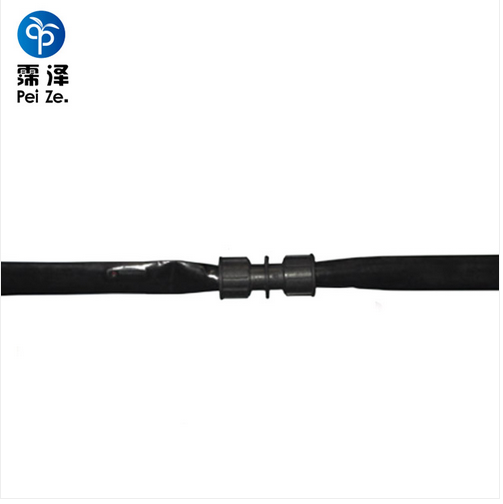
Application areas: Suitable for irrigation of crops such as sugarcane, cotton, strawberries, peppers, vegetables, bananas, and flowers. Applicable to both surface and subsurface irrigation systems.
The labyrinth flow channels and drip emitters are formed in a single vacuum hot-pressing process, resulting in excellent adhesion.
Multi-port outlet in turbulent flow mode, with strong resistance to clogging.
Maze-channel design ensures uniform water distribution, with a coverage rate of over 85% and a maximum laying length of 80 meters.
Lightweight, easy to install and manage, and low labor costs.
Applicable conditions:
It is used for cultivating crops in greenhouses and plastic tunnels, reducing pests and diseases, saving chemical fertilizers, and enhancing economic benefits.
When used for orchard irrigation, it can effectively increase yield, improve fruit quality, and effectively control weed growth.
Suitable for a variety of field crops, including cotton, traditional Chinese medicinal herbs, watermelon, and field vegetables, to enhance the level of mechanized planting.
Drip irrigation tape can be laid in a curved pattern along the ridges, making operation convenient.
2. Drip irrigation pipe:
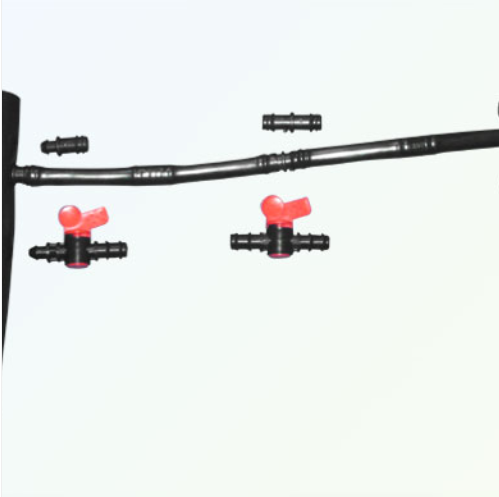
Drip irrigation tubing is classified into two types: in-line labyrinth-type drip tubing and inter-row drip tubing. Available diameters include 8 mm, 12 mm, 16 mm, and 20 mm. For the 8 mm, 12 mm, and 16 mm sizes, the flow rate ranges from 2.2 to 2.5 L/h; for the 20 mm size, the flow rate is 3.0 to 3.5 L/h, with a uniformity of water discharge not exceeding 5% to 10%. Wall thicknesses typically range from 0.12 mm to 0.60 mm, with common drip-hole spacings of 200 mm and 300 mm.
Application areas:
Suitable for irrigating crops such as potatoes, sugarcane, peppers, groundnuts, cotton, onions, strawberries, vegetables, bananas, and flowers; appropriate for both surface and subsurface irrigation.
Drip irrigation pipe There are many specifications; depending on the spacing, drip tapes can be categorized as 0.3 m, 0.5 m, 1.2 m, 1.6 m, 2.4 m, and so on. In addition, the tapes come in different working pressures and emitter flow rates.
Drip irrigation pipe manufacturer: Drip irrigation installation is typically carried out before planting, following fertilization and soil tillage in the greenhouse. Prior to laying the drip lines, ridges must first be formed; once the ridges are in place, the drip pipes are laid according to the ridge width and the specific needs of the crop. If the ridges are wide, two drip lines can be installed; if the ridges are narrow, only one drip line is required. After the pipes are properly laid, the ends should be tightly sealed and secured. Then cover the area with plastic mulch, stretching both ends taut and leveling the surface, before pressing down the edges with soil. If the seedlings do not require watering during their early growth stage, there is no need to connect the drip lines to the main water supply line just yet.
II. Differences
Drip irrigation pipes and drip irrigation tapes are both widely used. So what exactly is the difference between the two?
1. Visual differences: Drip irrigation tape is flat when there is no water or pressure, whereas drip irrigation pipe remains cylindrical in the absence of water.
2. Drip emitter types: Drip irrigation tapes typically use in-line flat-plate emitters, while drip irrigation pipes employ in-line cylindrical emitters; both drip irrigation pipes and drip irrigation tapes’ emitters provide flow stabilization.
3. Application Scope: Drip irrigation tapes are typically used for subsurface drip irrigation of maize, cotton, and potatoes, as well as for subsurface drip irrigation of vegetables in greenhouses and plastic tunnels.
4. Service Life: Drip irrigation tape has a shorter service life, while drip irrigation pipes have a longer service life.
5. Investment: The initial investment for drip irrigation tape is low, whereas the initial investment for drip tubing is higher.
6. Water Discharge: The drip emitters on drip irrigation tape have a discharge rate of approximately 2 L/hour, while those on drip irrigation tubing have a discharge rate of 2.2–3 L/hour.
Drip irrigation pipe manufacturers: As noted above, there are distinct differences between drip irrigation pipes and drip irrigation tapes, each with its own advantages. Therefore, it is essential to take into account the specific crop-growing conditions and select the option that best suits your needs.