
-
About UsHebei Runtian Water-Saving Equipment Co., Ltd. is a specialized, modern enterprise that integrates research and development, manufacturing, sales, and engineering installation of plastic irrigation products.

-
ProductsOur main products include: lateral labyrinth drip irrigation tape, inline patch-type drip irrigation tape, inline cylindrical drip irrigation tubing, inter-tube drip irrigation tubing, a wide range of sprinkler and micro-sprinkler accessories, drip arrows, pressure-compensated drippers, turbulent-flow small-tube emitter drip irrigation systems, PE water supply pipes in various models and specifications along with corresponding pipe fittings, PVC underground water conveyance pipes and PVC pipe fittings, filters, fertigation equipment, and other water-saving irrigation products and equipment for greenhouse cultivation, field farming, and micro-drip and micro-sprinkler irrigation.
-
BlogWe look forward to sincere cooperation with you, backed by stable and reliable quality, prompt delivery times, and superior after-sales service.
-
Qualifications
-
Cases
-
Contact Us
Fruit Tree Drip Irrigation Tubing: Why Do Fruit Trees Need Drip Irrigation?
Release Date:
2021-11-09
Fruit Tree Drip Irrigation Pipes: Do Fruit Trees Really Need Drip Irrigation? Today, thanks to government support, drip irrigation for fruit trees has gradually gained acceptance among orchardists in many provinces. Practical experience has also demonstrated that drip irrigation is highly suitable for orchard fruit trees; numerous orchards have adopted this method, resulting in substantial yield increases. Fruit Tree Drip Irrigation Pipes: Why Do Fruit Trees Need Drip Irrigation? Today, thanks to government support, drip irrigation for fruit trees has gradually gained acceptance among orchardists in many provinces. Practical experience has also demonstrated that drip irrigation is highly suitable for orchard fruit trees; numerous orchards have adopted this method, resulting in substantial yield increases.
Fruit tree drip irrigation pipe : Do fruit trees need drip irrigation? Today, thanks to government support, drip irrigation for fruit trees has gradually gained acceptance among orchardists in many provinces. Practical experience has also demonstrated that drip irrigation is highly suitable for orchards, with numerous fruit growers adopting the system and achieving substantial increases in yield.
Fruit Tree Drip Irrigation Tubing: Why Do Fruit Trees Need Drip Irrigation?
Today, thanks to government support, drip irrigation for fruit trees has gradually gained acceptance among fruit growers in many provinces. Practical experience has also demonstrated that drip irrigation is highly suitable for orchards, with numerous fruit growers adopting the system and achieving substantial increases in yield.
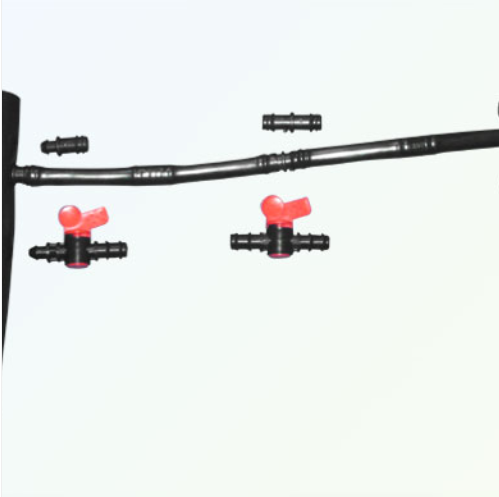
Fruit Tree Drip Irrigation Experiment
Land has a certain impact on the growth of fruit trees in orchards. The higher the temperature, the earlier the fruit trees mature, and the greater the economic benefits for fruit growers. Conventional flood irrigation leads to surface runoff and substantial heat loss through evaporation of surface water, which can to some extent lower soil temperature—conditions that are unfavorable for the optimal growth of cash crops. In contrast, drip irrigation wets a small area, eliminates surface evaporation, and has little effect on soil temperature.
Fruit Tree Drip Irrigation Pipe – Soil Protection
Fruit-tree drip irrigation also retains the traditional advantages of drip irrigation: it does not generate surface runoff, thereby reducing the loss of soil nutrients due to leaching, lowering the likelihood and severity of soil compaction in China, and safeguarding the structural integrity of the soil–environment system.
Fruit Tree Drip Irrigation Tubing—Reduces Pests
Due to the small wetted area and high evaporation rate, fruit trees experience relatively low air humidity within the canopy, which is unfavorable for pest survival and can help reduce the incidence of diseases and pests.
Fruit Tree Drip Irrigation Tubing—Reducing the Spread of Harmful Pathogens
After an infectious disease breaks out in fruit trees, drip irrigation can effectively reduce the probability of disease transmission by precisely controlling irrigation water application.
Fruit Tree Drip Irrigation Tubing—Reducing Costs
Drip irrigation systems typically integrate water and fertilizer application. As the efficiency of soil moisture utilization increases, so does the efficiency of fertilizer and pesticide use. Improved fertilizer efficacy leads to direct savings on fertilizer inputs and reduces the need for manual fertilization.
Fruit Tree Drip Irrigation Tubing—Reducing Labor
Fruit-tree drip-irrigation pipe systems are typically semi-automatic machines; by simply controlling the valves and adjusting the relevant parameters, the labor intensity for fruit growers can be significantly reduced.
The foregoing has introduced fruit-tree drip irrigation and explained why it is essential for fruit trees. Fruit-tree drip irrigation protects the soil and leverages the traditional advantages of drip irrigation: it prevents surface runoff, thereby reducing the loss of soil nutrients due to leaching, lowering the likelihood and severity of soil compaction in China, and safeguarding the structure of the soil ecosystem. Moreover, fruit-tree drip irrigation helps reduce pest populations: because the area of soil kept moist is small and evaporation is high, the relative humidity within the tree canopy remains low, creating an environment that is unfavorable for pest survival and thus decreasing the incidence of diseases and pests. If you have any other related questions, please feel free to contact us at any time.
Hebei Runtian Water-Saving Equipment Co., Ltd. is a manufacturer of drip irrigation tape, drip irrigation tubing, and PE drip irrigation pipe. Its main products include ground-insert micro-sprinklers, automated drip irrigation systems, suspended micro-sprinklers, field drip irrigation, field sprinkler irrigation, fruit-tree drip irrigation, greenhouse drip irrigation, irrigation PE pipe, subsurface drip irrigation, intelligent fertilizer applicators, integrated water-fertilizer machines, and sprinkler irrigation tape. The company is a comprehensive enterprise that integrates research, production, sales, and engineering installation of plastic irrigation products. Adhering to a people-oriented approach and a commitment to innovation, the company has established a new business philosophy centered on promoting water-saving irrigation equipment and technologies tailored to China’s national conditions. It strives to expand both domestic and international markets, enhance its service system, and continuously strengthen and grow its marketing network. We welcome you to visit for consultation and negotiation.
Keywords:
Recommended News
2026-04-08
How should hanging micro-sprinklers be properly installed to ensure optimal irrigation performance?
2026-03-29
How does irrigation technology using suspended micro-sprinklers improve crop water-use efficiency?
2026-03-19
The applications of ground-inserted micro-sprinklers are not limited to agricultural fields.
2026-03-09
How to Select the Right Underground Micro Sprinkler Nozzle to Enhance Irrigation Efficiency
2026-02-27
Share to


Contact Information
Email:1468828465@qq.com
QQ number: 1468828465
Phone:18348888811
Phone:0311-89271615
Website:www.hebeiruntian.com
Factory Address: Dasun Village, Luancheng District, Shijiazhuang City, Hebei Province

WeChat Official Account