-
About UsHebei Runtian Water-Saving Equipment Co., Ltd. is a specialized, modern enterprise that integrates research and development, manufacturing, sales, and engineering installation of plastic irrigation products.

-
ProductsOur main products include: lateral labyrinth drip irrigation tape, inline patch-type drip irrigation tape, inline cylindrical drip irrigation tubing, inter-tube drip irrigation tubing, a wide range of sprinkler and micro-sprinkler accessories, drip arrows, pressure-compensated drippers, turbulent-flow small-tube emitter drip irrigation systems, PE water supply pipes in various models and specifications along with corresponding pipe fittings, PVC underground water conveyance pipes and PVC pipe fittings, filters, fertigation equipment, and other water-saving irrigation products and equipment for greenhouse cultivation, field farming, and micro-drip and micro-sprinkler irrigation.
-
BlogWe look forward to sincere cooperation with you, backed by stable and reliable quality, prompt delivery times, and superior after-sales service.
-
Qualifications
-
Cases
-
Contact Us
What are the classifications of drip irrigation tubing offered by drip irrigation tubing manufacturers?
Release Date:
2022-11-03
Drip irrigation tubing manufactured by specialized producers is a critical component of drip irrigation systems. Based on the water requirements of crops, it delivers the necessary moisture and nutrients uniformly and slowly to the soil in the root zone through a low-pressure piping network and emitters installed along capillary tubes.
Drip irrigation tubing manufactured by specialized producers is a critical component of drip irrigation systems. Based on the water requirements of crops, it delivers the necessary moisture and nutrients uniformly and slowly to the soil in the root zone through a low-pressure piping network and emitters installed along capillary tubes.
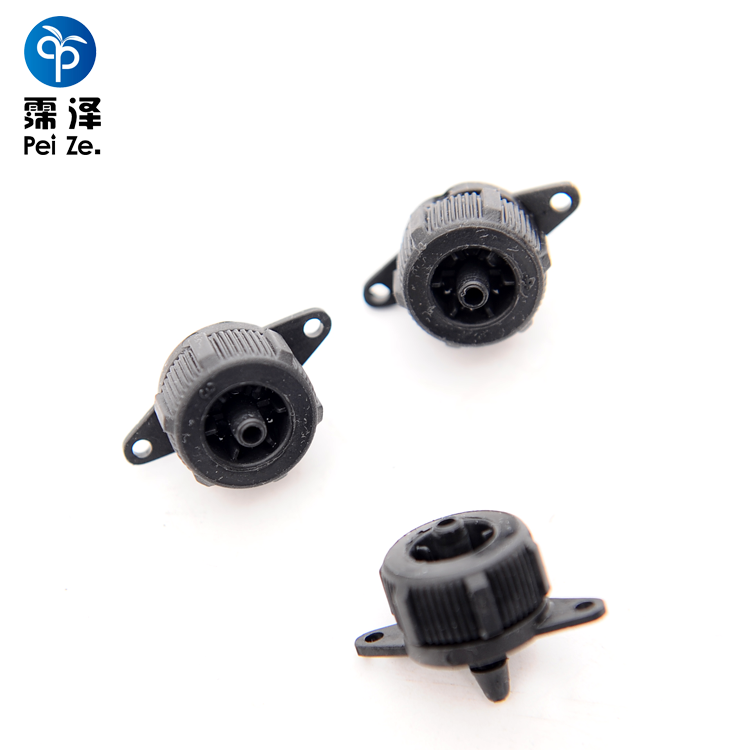
I. Classification of Drip Irrigation Pipe Manufacturers
1. Can be classified into pressure-compensated drip irrigation tubing and non-pressure-compensated drip irrigation tubing.
2. Can be classified as: embedded drip irrigation tubing and inter-row drip irrigation tubing.
II. Advantages of Drip Irrigation Pipes from Manufacturers
1. Water-saving, fertilizer-saving, and labor-saving
Drip irrigation tubing manufactured by specialized producers represents a fully piped water-delivery system combined with localized micro-irrigation, which can minimize water leakage and losses to a great extent. At the same time, because the water required by the crop root zone is supplied promptly, there is no issue of peripheral water loss, thereby significantly enhancing water-use efficiency. Irrigation can be conveniently integrated with fertilization—fertilizers are dissolved and then injected into the irrigation system. As the fertilizer is delivered together with the irrigation water, the nutrient elements are applied directly and uniformly to the root zone, truly achieving simultaneous water and fertilizer application and substantially improving fertilizer use efficiency. Moreover, due to the localized nature of micro-irrigation, with minimal seepage of both water and fertilizer, fertilizer application can be reduced. The application of fertigation technology also facilitates the timely supplementation of costly micronutrients for crops, thereby avoiding waste. The drip irrigation system is controlled manually or automatically via valves and can be further integrated with fertilization, which markedly reduces labor input, lowers production costs, enhances resource utilization, and ensures complete coverage of irrigation.
2. Control temperature and humidity
Traditional furrow irrigation in greenhouses involves large water applications and keeps the soil surface moist for extended periods. This not only causes rapid declines and slow rises in both greenhouse and soil temperatures but also increases evaporation, leading to excessively high indoor humidity that can readily promote the occurrence of vegetable and flower diseases and pests. In contrast, drip irrigation delivers water directly to the root zone through localized microirrigation, keeping most of the soil surface dry while supplying water uniformly and slowly to the root zone. This approach effectively maintains and restores soil temperature, reduces water evaporation, and lowers indoor humidity. Using subsurface drip irrigation—where drip lines (or tapes) are laid beneath plastic mulch—yields even better results. Moreover, drip irrigation is easy to operate, allows for frequent irrigations, features very small emitter openings with low flow rates, and requires relatively long irrigation durations per application. As a result, soil moisture fluctuations are minimal, enabling precise control of root-zone soil moisture at levels that closely match the optimal range for vegetable and flower growth over extended periods. By carefully managing both indoor air humidity and soil moisture, the incidence of diseases and pests can be significantly reduced, thereby further decreasing the need for chemical pesticides.
3. Maintaining Soil Structure
Under the influence of large irrigation volumes typical of traditional furrow and border irrigation, soil in protected cultivation is subject to increased washing, compaction, and erosion. If the soil is not loosened in a timely manner, it can become severely compacted, with reduced aeration and some degree of damage to soil structure. In contrast, drip irrigation is a form of microirrigation in which water infiltrates the soil slowly and uniformly, helping to maintain soil structure and creating an optimal soil environment in terms of moisture, nutrients, and temperature.
4. Improve quality, increase output, and enhance efficiency
The use of drip irrigation tubing by manufacturers reduces the application rates of water, fertilizers, and pesticides, while also decreasing the incidence of pests and diseases, thereby significantly enhancing product quality. In summary, compared with conventional irrigation methods, drip irrigation in greenhouses and other protected cultivation facilities can substantially increase crop yields, enable earlier market entry, reduce the inputs of water, fertilizers, and pesticides, and lower labor costs, thus delivering substantial economic and social benefits. Drip irrigation technology for protected horticulture aligns with the modern agricultural goals of high yield, high efficiency, and superior quality, which is the fundamental rationale for its existence and widespread adoption.
Keywords:
Recommended News
2026-04-08
How should hanging micro-sprinklers be properly installed to ensure optimal irrigation performance?
2026-03-29
How does irrigation technology using suspended micro-sprinklers improve crop water-use efficiency?
2026-03-19
The applications of ground-inserted micro-sprinklers are not limited to agricultural fields.
2026-03-09
How to Select the Right Underground Micro Sprinkler Nozzle to Enhance Irrigation Efficiency
2026-02-27
Share to


Contact Information
Email:1468828465@qq.com
QQ number: 1468828465
Phone:18348888811
Phone:0311-89271615
Website:www.hebeiruntian.com
Factory Address: Dasun Village, Luancheng District, Shijiazhuang City, Hebei Province

WeChat Official Account