
-
About UsHebei Runtian Water-Saving Equipment Co., Ltd. is a specialized, modern enterprise that integrates research and development, manufacturing, sales, and engineering installation of plastic irrigation products.

-
ProductsOur main products include: lateral labyrinth drip irrigation tape, inline patch-type drip irrigation tape, inline cylindrical drip irrigation tubing, inter-tube drip irrigation tubing, a wide range of sprinkler and micro-sprinkler accessories, drip arrows, pressure-compensated drippers, turbulent-flow small-tube emitter drip irrigation systems, PE water supply pipes in various models and specifications along with corresponding pipe fittings, PVC underground water conveyance pipes and PVC pipe fittings, filters, fertigation equipment, and other water-saving irrigation products and equipment for greenhouse cultivation, field farming, and micro-drip and micro-sprinkler irrigation.
-
BlogWe look forward to sincere cooperation with you, backed by stable and reliable quality, prompt delivery times, and superior after-sales service.
-
Qualifications
-
Cases
-
Contact Us
Introduction to the features of ground-insert micro-sprinklers—save this now!
Release Date:
2023-05-21
As an important tool in modern agricultural production, the subsurface drip emitter traces its origins to humanity’s need for irrigation technology. However, despite years of development, many challenges still remain that require addressing.
As an important tool in modern agricultural production, the subsurface drip emitter’s development can be traced back to our need for irrigation technology. However, despite years of advancement, many challenges remain that require resolution. This paper analyzes the current status and future prospects of subsurface drip emitters, exploring their key technologies and potential applications.
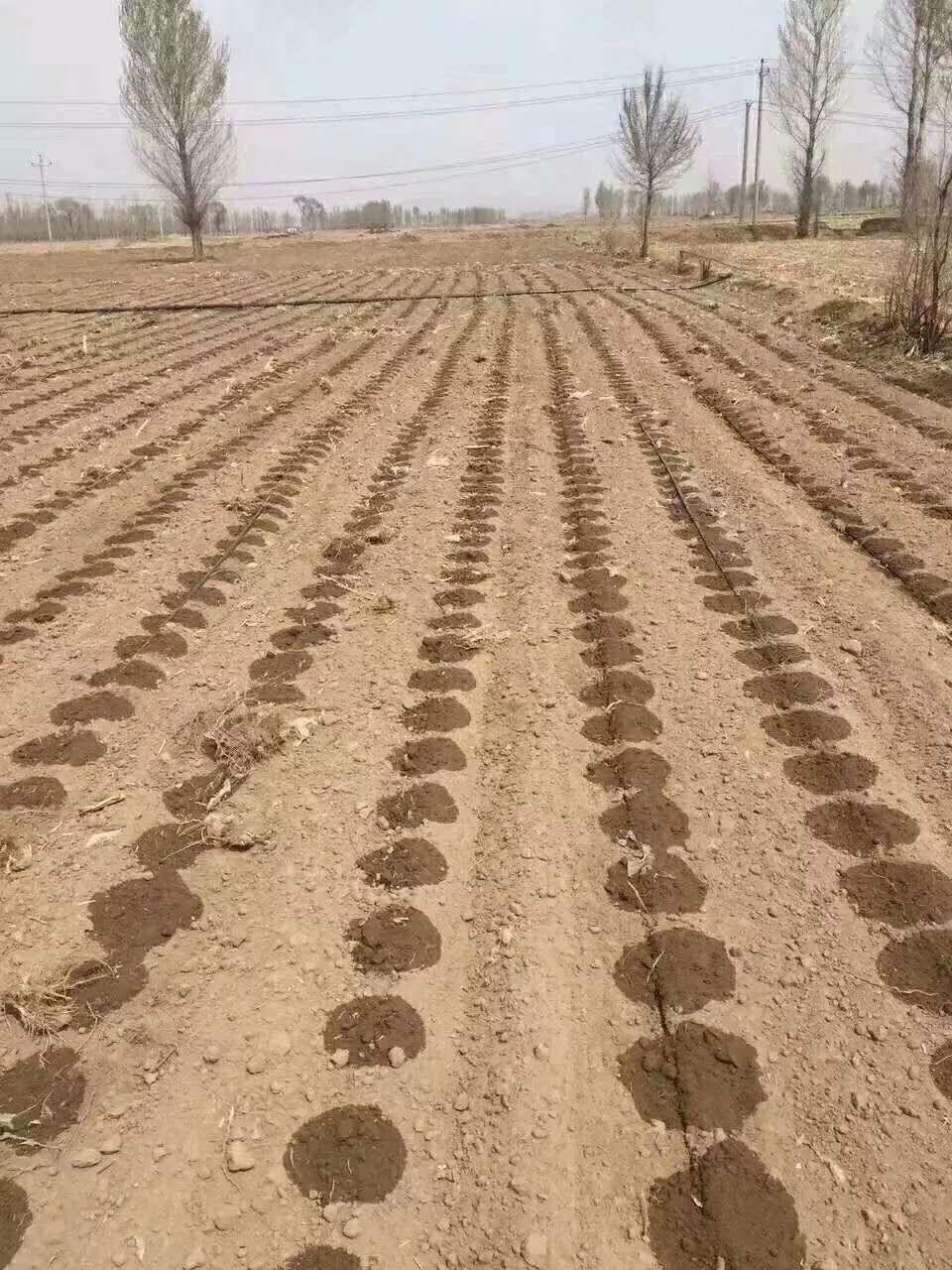
The development of subsurface drip emitters stems from the ongoing exploration and growing demand for more efficient irrigation technologies. In the past, farmers relied on gravity-fed wells and manually dug field wells for irrigation, methods that were highly inefficient. With the widespread adoption of modern molded fertilizers and pesticides, traditional irrigation practices could no longer meet the needs of agricultural production.
The core technologies of subsurface drip emitters primarily include flow control, uniformity control, turbine-based regulation, and static-pressure control. Currently, several emerging technologies—such as advanced flow meters and sensors—have been integrated into subsurface drip emitters, providing robust support for enhancing irrigation efficiency and quality.
Its primary applications are in agricultural irrigation and urban landscaping and green space maintenance. In agricultural irrigation, subsurface micro-sprinklers not only significantly enhance irrigation efficiency but also reduce soil erosion and improve land-use efficiency. In urban landscaping and green space maintenance, these subsurface micro-sprinklers are used for watering parks, green belts, and streetsides, making them an essential tool for urban greening.
At present, the technology has gradually matured. However, it still faces several challenges, such as high costs, inconvenient operation, and pollutant emissions. At the same time, with societal development and increasing public demand for environmental protection, the future prospects for ground-mounted micro-sprinklers are even more promising.
According to analysis, with growing public environmental awareness and increasing irrigation demand, the market prospects for ground-insert micro-sprinklers are exceptionally promising. In particular, driven by urban green-space maintenance initiatives and supported by national water-conservation policies, ground-insert micro-sprinklers are poised for even broader applications.
The future development of ground-insert micro-sprinklers will go beyond mere technological advancements; it will place greater emphasis on product practicality and user-centric design. Looking ahead, these sprinklers will explore new materials to reduce costs while prioritizing environmental protection and water conservation.
In summary, although subsurface drip micro-sprinklers have demonstrated strong performance in technological advancement, application scenarios, and market prospects, further research and thoughtful consideration are still needed to drive innovative development and better meet the demands of agricultural production and environmental protection.
Ground-insert micro-sprinklers are irrigation devices commonly used in farmland, parks, flower beds, and other settings. They have the following characteristics:
Ground-mounted micro-sprinklers can evenly distribute a fine mist of water over a designated area, ensuring more uniform irrigation.
The amount of water it uses can be adjusted as needed, thereby preventing water waste.
It can be arranged according to requirements, offering high flexibility and easy handling and replacement.
The following points should be noted when using ground-embedded micro-sprinklers:
It requires regular cleaning and maintenance to prevent uneven water spray or blockages.
Select the appropriate sprinkler: Choose a sprinkler that is suitable for the area and plants to be irrigated, in order to avoid waste and unnecessary losses.
The water pressure should be adjusted according to the actual conditions to prevent the flow from being too strong or too weak.
In summary, the ground-insert micro-sprinkler is a highly practical irrigation tool that is simple and convenient to use; however, certain precautions should be observed. When used correctly, it can significantly enhance irrigation efficiency and deliver superior results.
Keywords:
Recommended News
2026-04-08
How should hanging micro-sprinklers be properly installed to ensure optimal irrigation performance?
2026-03-29
How does irrigation technology using suspended micro-sprinklers improve crop water-use efficiency?
2026-03-19
The applications of ground-inserted micro-sprinklers are not limited to agricultural fields.
2026-03-09
How to Select the Right Underground Micro Sprinkler Nozzle to Enhance Irrigation Efficiency
2026-02-27
Share to


Contact Information
Email:1468828465@qq.com
QQ number: 1468828465
Phone:18348888811
Phone:0311-89271615
Website:www.hebeiruntian.com
Factory Address: Dasun Village, Luancheng District, Shijiazhuang City, Hebei Province

WeChat Official Account