-
About UsHebei Runtian Water-Saving Equipment Co., Ltd. is a specialized, modern enterprise that integrates research and development, manufacturing, sales, and engineering installation of plastic irrigation products.

-
ProductsOur main products include: lateral labyrinth drip irrigation tape, inline patch-type drip irrigation tape, inline cylindrical drip irrigation tubing, inter-tube drip irrigation tubing, a wide range of sprinkler and micro-sprinkler accessories, drip arrows, pressure-compensated drippers, turbulent-flow small-tube emitter drip irrigation systems, PE water supply pipes in various models and specifications along with corresponding pipe fittings, PVC underground water conveyance pipes and PVC pipe fittings, filters, fertigation equipment, and other water-saving irrigation products and equipment for greenhouse cultivation, field farming, and micro-drip and micro-sprinkler irrigation.
-
BlogWe look forward to sincere cooperation with you, backed by stable and reliable quality, prompt delivery times, and superior after-sales service.
-
Qualifications
-
Cases
-
Contact Us
What are the advantages of sprinkler irrigation? A sprinkler tape manufacturer explains.
Release Date:
2022-07-26
Sprinkler irrigation belt manufacturers believe that sprinkler irrigation is a water-saving irrigation technique. It involves pressurizing irrigation water—either by using a pump or relying on the natural gravitational flow from a water source—and then conveying it through pipelines to sprinkler nozzles, which atomize the water into fine droplets for uniform application over crops. Compared with conventional surface irrigation methods, it offers the following advantages:
Sprinkler irrigation belt manufacturers believe that sprinkler irrigation is a water-saving irrigation technique. It involves pressurizing irrigation water—either by using a pump or relying on the natural gravitational flow from a water source—and then conveying it through pipelines to nozzles, which atomize the water into fine droplets for uniform application over crops. Compared with conventional surface irrigation methods, it offers the following advantages:
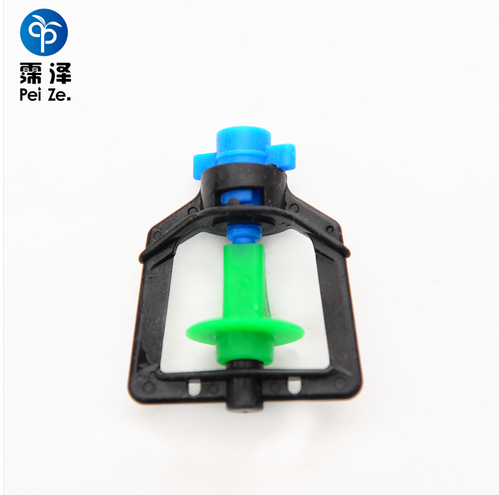
1. Water conservation: Saves 30–50% of water compared with surface irrigation.
2. The diameter of water droplets in the soil and the sprinkler irrigation intensity can be adjusted according to soil texture, thereby preventing soil erosion and minimizing the loss of water, soil, and nutrients.
3. Water conservation. Sprinkler irrigation can save 7%–13% of the total area, thereby increasing land-use efficiency.
4. Labor-saving. Sprinkler irrigation belt manufacturers believe that the application of sprinkler irrigation has enhanced the mechanization and automation of irrigation, significantly reducing labor intensity and conserving labor resources.
5. High adaptability. Sprinkler irrigation tape manufacturers believe that sprinkler irrigation is not limited by terrain slope or soil permeability, making it particularly suitable for irrigating complex hilly areas where surface irrigation is difficult to implement.
6. Increased Yield. Sprinkler irrigation system manufacturers believe that sprinkler irrigation facilitates precise control of soil moisture and helps maintain soil fertility. At the same time, it can regulate the microclimate in the field, reducing leaf-surface temperatures during hot seasons and washing away dust from stems and leaves, thereby promoting plant respiration and photosynthesis and ultimately boosting yields. Sprinkler irrigation can increase yields of field crops by about 20%, economic crops by more than 30%, and vegetables by 1 to 2 times, while also improving product quality. Sprinkler irrigation has a broad range of applications and is suitable for irrigating nearly all early-season crops, including grains, vegetables, and fruit trees, as well as soils with high permeability and those with low infiltration rates. In addition to crop irrigation, sprinkler irrigation can also be used for watering ornamental grasses and flowers in landscaping. It can further be employed for spraying fertilizers and pesticides, as well as for lightning protection, frost prevention, heat mitigation, and dust suppression.
Sprinkler tape manufacturers believe that sprinkler irrigation equipment will continue to be integrated and its overall utilization rate will be improved. In addition to water irrigation, such equipment will also be used for fertilizer application, pesticide spraying, summer cooling, frost protection, and environmental sanitation. This will enhance the uniformity of sprinkler irrigation while reducing its intensity. Furthermore, the automation of sprinkler irrigation systems will be enhanced through the use of soil moisture meters and sensor networks: when soil moisture falls below a set threshold or exceeds an allowable range, the sprinkler units will automatically start or shut down; based on fault signals from the system or upon completion of an irrigation schedule, the water supply will be automatically turned off; and fixed sprinkler systems will be controlled by programmable controllers to implement grouped, rotating irrigation schedules.
Sprinkler irrigation belt manufacturers believe that sprinkler irrigation can conserve water, increase yields, reduce labor requirements, and lower labor intensity. At the same time, sprinkler irrigation can also modify the microclimate in the field—for example, by increasing air humidity and reducing summer temperatures; in winter or early spring, sprinkler irrigation can help prevent cold damage and frost. In addition, the flushing action of irrigation water on crop leaves can remove dust and pesticide residues, thereby enhancing photosynthetic efficiency. Throughout the entire growth period of winter wheat after green-up, sprinkler irrigation alters the distribution of meteorological factors near the soil surface, lowers air temperature in the canopy layer, and increases air humidity. The drier the climate, the more pronounced these effects become.
Keywords:
Recommended News
2026-04-08
How should hanging micro-sprinklers be properly installed to ensure optimal irrigation performance?
2026-03-29
How does irrigation technology using suspended micro-sprinklers improve crop water-use efficiency?
2026-03-19
The applications of ground-inserted micro-sprinklers are not limited to agricultural fields.
2026-03-09
How to Select the Right Underground Micro Sprinkler Nozzle to Enhance Irrigation Efficiency
2026-02-27
Share to


Contact Information
Email:1468828465@qq.com
QQ number: 1468828465
Phone:18348888811
Phone:0311-89271615
Website:www.hebeiruntian.com
Factory Address: Dasun Village, Luancheng District, Shijiazhuang City, Hebei Province

WeChat Official Account