-
About UsHebei Runtian Water-Saving Equipment Co., Ltd. is a specialized, modern enterprise that integrates research and development, manufacturing, sales, and engineering installation of plastic irrigation products.

-
ProductsOur main products include: lateral labyrinth drip irrigation tape, inline patch-type drip irrigation tape, inline cylindrical drip irrigation tubing, inter-tube drip irrigation tubing, a wide range of sprinkler and micro-sprinkler accessories, drip arrows, pressure-compensated drippers, turbulent-flow small-tube emitter drip irrigation systems, PE water supply pipes in various models and specifications along with corresponding pipe fittings, PVC underground water conveyance pipes and PVC pipe fittings, filters, fertigation equipment, and other water-saving irrigation products and equipment for greenhouse cultivation, field farming, and micro-drip and micro-sprinkler irrigation.
-
BlogWe look forward to sincere cooperation with you, backed by stable and reliable quality, prompt delivery times, and superior after-sales service.
-
Qualifications
-
Cases
-
Contact Us
What are the characteristics of sprinkler irrigation? A sprinkler tape manufacturer explains.
Release Date:
2022-08-08
Sprinkler irrigation tape manufacturers believe that, as the demands for ecological protection, resource conservation, cost reduction, and efficiency enhancement continue to rise, agricultural irrigation methods are undergoing significant changes, primarily shifting toward sprinkler irrigation, drip irrigation, and micro-sprinkler irrigation. Drip irrigation and micro-sprinkler irrigation are often used interchangeably; both are energy- and water-saving, labor- and time-efficient, convenient and quick, and effectively meet crops’ water needs in a timely manner.
Sprinkler tape manufacturers believe As the demands for ecological protection, resource conservation, and cost reduction with efficiency gains continue to rise, agricultural irrigation practices are undergoing significant transformation, with sprinkler irrigation, drip irrigation, and micro-sprinkler irrigation emerging as the primary methods. Drip irrigation and micro-sprinkler irrigation are often used interchangeably; both are highly energy- and water-efficient, reduce labor and time requirements, offer convenience and speed, and ensure that crop water needs are met promptly.
Sprinkler tape manufacturers believe Applications have demonstrated that this new irrigation method offers advantages in orchard management that are unmatched by traditional flood irrigation. It not only meets the water requirements of fruit trees—particularly during their growth and development stages—in a timely manner but also resolves the conflict between irrigation needs and ventilation requirements. Moreover, timely opening of irrigation systems can improve the microclimate within the orchard, thereby mitigating and preventing disasters and ensuring high yields and superior fruit quality.
Sprinkler tape manufacturers believe Spring drought is widespread in northern China, and in recent years In March and April, late spring cold snaps often damage flowers and fruits; in June, intense sunlight and high temperatures can scorch leaves, young fruit, and even the epidermis of branches and shoots—such disasters occur frequently and inflict serious harm on fruit production. During the peak bloom period in April 2022, high-temperature weather reappeared, hindering pollination and fertilization in apple and pear orchards, leading to a sharp decline in fruit set and a substantial reduction in yield. The adverse effects of such disastrous weather can be mitigated by activating sprinkler irrigation, leveraging the phase changes of water to absorb or release heat and thereby regulate orchard temperature; combining this approach with agronomic practices such as sowing cover crops within the orchard yields even better results.
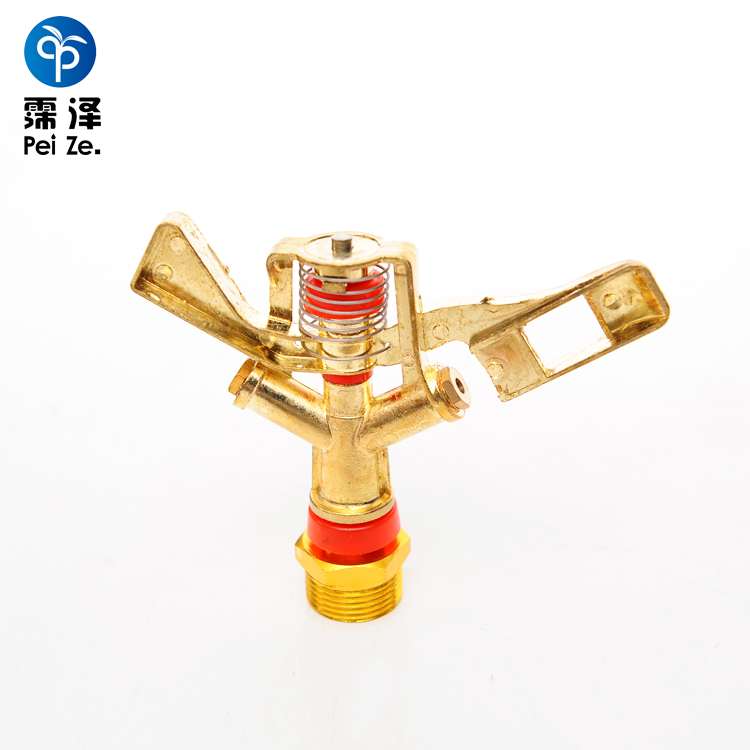
Sprinkler tape manufacturers believe Sprinkler irrigation is one of the most effective field irrigation methods both domestically and internationally for conserving water and increasing crop yields. Its most prominent advantages are its adaptability to sloping and uneven farmland, its efficient use of land, and its reduced risk of soil erosion and compaction. It promotes a healthy microbial cycle, improves the microclimate in the field, boosts crop yields, and enhances crop quality—features that are not found in other irrigation methods. In addition, sprinkler irrigation systems can be integrated with fertilization and pesticide application, providing a comprehensive agronomic solution.
Sprinkler tape manufacturers believe Fully fixed sprinkler irrigation systems are favored for their convenient operation, ease of management, high production efficiency, small footprint, and ease of implementing automated control, More It is widely favored for its ability to minimize labor requirements. However, it poses challenges to the mechanization of agricultural irrigation, serving as a major obstacle to the development of fixed sprinkler systems. A series of sprinkler sub-valve assemblies developed and manufactured in Shijiazhuang has successfully addressed this technical hurdle. These sub-valves include multi-functional sprinkler sub-valves, telescopic multi-functional sprinkler sub-valves, telescopic multi-functional outlets, and integrated sprinkler sub-valves. During normal operation, they remain buried underground; once the well is opened, water pressure causes them to rise to the surface. When irrigation ceases, the above-ground components, such as the spray nozzles, are removed and stored underground. With no equipment protruding above ground during non-irrigation periods, large agricultural machinery can freely enter the fields for operations. This invention aligns with the trend toward agricultural modernization.
Keywords:
Recommended News
2026-04-08
How should hanging micro-sprinklers be properly installed to ensure optimal irrigation performance?
2026-03-29
How does irrigation technology using suspended micro-sprinklers improve crop water-use efficiency?
2026-03-19
The applications of ground-inserted micro-sprinklers are not limited to agricultural fields.
2026-03-09
How to Select the Right Underground Micro Sprinkler Nozzle to Enhance Irrigation Efficiency
2026-02-27
Share to


Contact Information
Email:1468828465@qq.com
QQ number: 1468828465
Phone:18348888811
Phone:0311-89271615
Website:www.hebeiruntian.com
Factory Address: Dasun Village, Luancheng District, Shijiazhuang City, Hebei Province

WeChat Official Account