-
About UsHebei Runtian Water-Saving Equipment Co., Ltd. is a specialized, modern enterprise that integrates research and development, manufacturing, sales, and engineering installation of plastic irrigation products.

-
ProductsOur main products include: lateral labyrinth drip irrigation tape, inline patch-type drip irrigation tape, inline cylindrical drip irrigation tubing, inter-tube drip irrigation tubing, a wide range of sprinkler and micro-sprinkler accessories, drip arrows, pressure-compensated drippers, turbulent-flow small-tube emitter drip irrigation systems, PE water supply pipes in various models and specifications along with corresponding pipe fittings, PVC underground water conveyance pipes and PVC pipe fittings, filters, fertigation equipment, and other water-saving irrigation products and equipment for greenhouse cultivation, field farming, and micro-drip and micro-sprinkler irrigation.
-
BlogWe look forward to sincere cooperation with you, backed by stable and reliable quality, prompt delivery times, and superior after-sales service.
-
Qualifications
-
Cases
-
Contact Us
What are the advantages of drip irrigation tubing? A drip irrigation tubing manufacturer is here to explain!
Release Date:
2022-11-23
According to the drip irrigation pipe manufacturer, drip irrigation pipes are primarily used for irrigating economic crops such as fruit trees, vegetables, seedlings, and urban landscaping. The irrigation system incorporating drip irrigation pipes typically consists of a water source, a headworks section (including filtration and fertilization equipment), main pipelines, and a drip irrigation network.
According to the drip irrigation pipe manufacturer, this system is primarily used for irrigating economic crops such as fruit trees, vegetables, seedlings, and urban landscaping. The drip irrigation system typically consists of a water source, a headworks section (including filtration and fertilization equipment), main pipelines, and a drip irrigation network. What are its advantages? Let the drip irrigation pipe manufacturer explain!
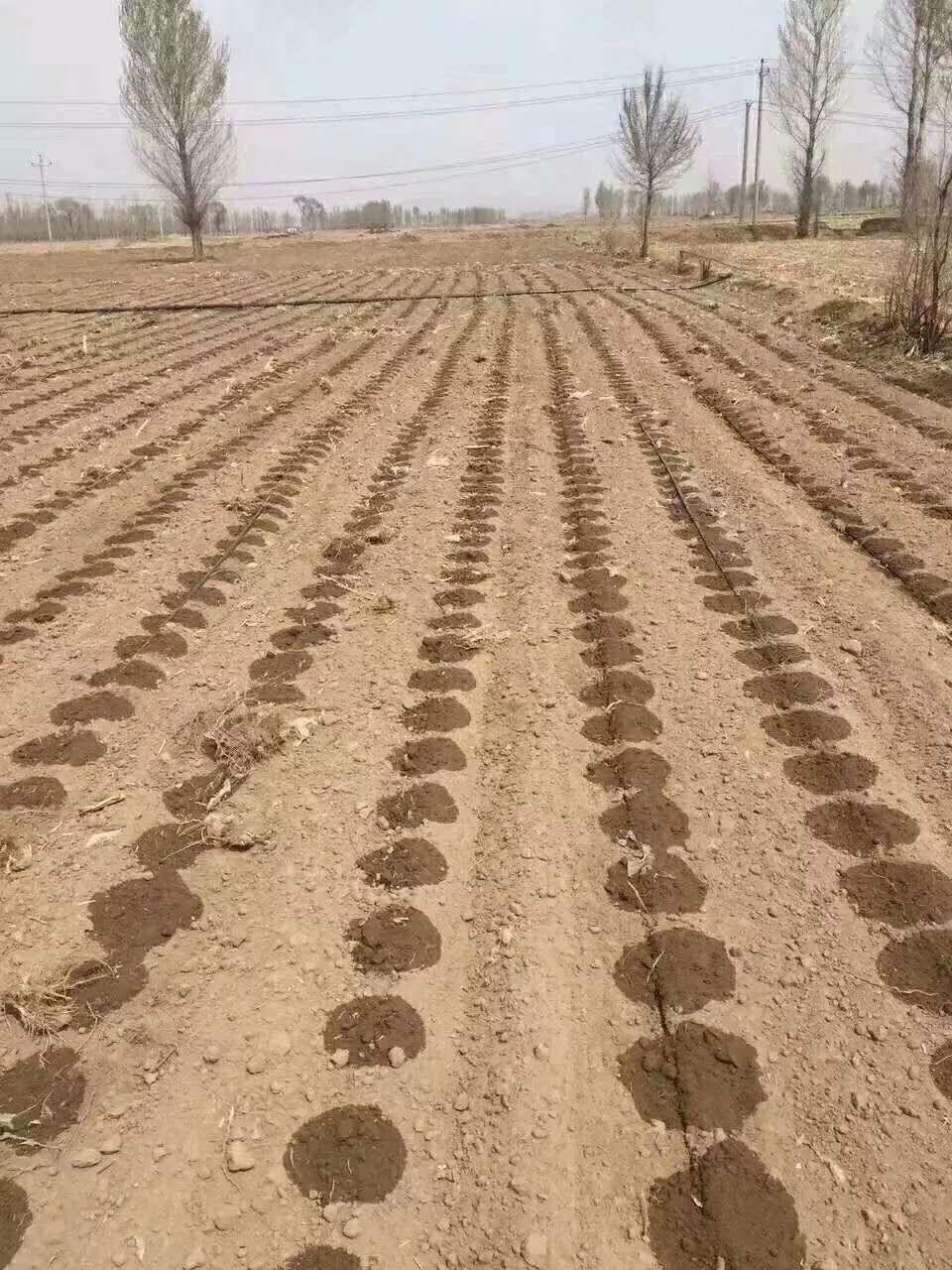
1. Water conservation, fertilizer savings, and labor reduction. According to drip irrigation pipe manufacturers, this system employs full-pipeline water delivery combined with localized micro-irrigation, minimizing seepage and losses to the greatest extent possible. At the same time, because the moisture required by the crop root zone is supplied promptly without any peripheral losses, water-use efficiency is significantly enhanced. Irrigation can be conveniently integrated with fertilization by dissolving chemical fertilizers and injecting them into the irrigation system. With fertilizers delivered directly and uniformly to the root zone through the irrigation water, water–fertilizer synchronization is achieved, greatly improving fertilizer use efficiency. Moreover, due to localized, small-scale control and reduced seepage during micro-irrigation, the amount of chemical fertilizer applied can be reduced. The application of fertigation also facilitates the timely supplementation of costly micronutrients for crops while avoiding waste. By controlling the drip irrigation system manually or automatically via valves and integrating it with fertilization, labor input can be markedly reduced, production costs lowered, resource utilization improved, and full-coverage irrigation ensured.
2. Control temperature and humidity. According to drip irrigation pipe manufacturers, traditional furrow irrigation in greenhouses involves large irrigation volumes and prolonged surface moisture, which not only causes rapid declines and slow recoveries in both air and soil temperatures but also increases evaporation, leading to excessively high indoor humidity and a higher risk of vegetable and flower diseases and pests. In contrast, drip irrigation is a form of localized micro-irrigation: the soil surface remains largely dry, while drip emitters deliver water evenly and slowly directly to the root zone, effectively maintaining and raising soil temperature, reducing water evaporation, and lowering indoor humidity. Subsurface drip irrigation—where drip irrigation pipes (or tapes) are laid beneath plastic mulch—yields even better results.
3. Maintain soil structure. According to drip irrigation pipe manufacturers, conventional furrow irrigation with large volumes of water leads to increased soil erosion, compaction, and degradation. If the soil is not promptly tilled and loosened, severe crusting can occur, reducing aeration and causing some degree of damage to the soil structure. Drip irrigation, as a form of micro-irrigation, allows water to infiltrate the soil slowly and evenly, thereby helping to maintain soil structure and creating an optimal soil environment in terms of moisture, nutrients, and temperature.
4. Enhancing quality, increasing yield, and improving efficiency. According to drip irrigation pipe manufacturers, its application can significantly improve product quality by reducing the use of water, fertilizers, and pesticides, as well as lowering the incidence of diseases and pests. In short, compared with traditional irrigation methods, greenhouse or horticultural drip irrigation can substantially boost crop yields, enable earlier market entry, and reduce costs for water, fertilizers, pesticides, and labor, resulting in notable economic and social benefits. Horticultural drip irrigation technology aligns with the modern agricultural requirements of high yield, high efficiency, and superior quality—this is precisely the fundamental reason for its existence and widespread adoption.
Keywords:
Recommended News
2026-04-08
How should hanging micro-sprinklers be properly installed to ensure optimal irrigation performance?
2026-03-29
How does irrigation technology using suspended micro-sprinklers improve crop water-use efficiency?
2026-03-19
The applications of ground-inserted micro-sprinklers are not limited to agricultural fields.
2026-03-09
How to Select the Right Underground Micro Sprinkler Nozzle to Enhance Irrigation Efficiency
2026-02-27
Share to


Contact Information
Email:1468828465@qq.com
QQ number: 1468828465
Phone:18348888811
Phone:0311-89271615
Website:www.hebeiruntian.com
Factory Address: Dasun Village, Luancheng District, Shijiazhuang City, Hebei Province

WeChat Official Account